
by blake gray, principal at apex estate agents
Recently I interviewed half a dozen ‘Coasties’ over the age of 55 for a two–part article in this magazine, titled Memories From Home. The purpose of these interviews was to understand where these people started in life, what their childhood home was like, in what ways did they relate to property, by what means it was that they became ‘Coasties’. These interviews were more affecting than I’d anticipated and what is more, the feedback I’ve subsequently received from readers has mirrored my sentiments. Perhaps the most salient through–line across these interviews was how noticeably the home, its furnishings, the customs of its inhabitants, and the general happenings within it have shifted in just the last generation or two. So this piece is less about real estate per se, but more accurately it’s about how home has changed over the last few generations. Is there something to be discovered or learnt by contrasting the home of the past with that of the present? Here are some observations, along with a few of my takeaways as inspired by these interviews.
Growing up
Kicking a ball against the incinerator in the backyard for hours. Walking everywhere, or if you were fortunate enough, perhaps scraping up enough money to catch the bus or train. Exploring the backyard, bush, or neighbourhood while under the express instructions to, ‘be home for dinner’. Pitching in by sliding up and down the hallway with your socks on while mum polished the parquet floors. Braving the long trek from school to help a parent at work so they could ‘punch out’ sooner. Knowing everyone in the neighbourhood and being familiar with all the retailers on the high street. Surfing every waking chance you had. Inspecting the vegetable garden with your grandfather because he treated you like a collaborator and told a good story every now and then. These are all accounts from my interviews. How many young people today will recall their youth with this kind of fondness and nostalgia? Two things stand out in my view. The first is that children were permitted enough freedom to develop at least some kind of independence and resilience. The second is that kids were active participants in all aspects of the home and not surprisingly they enjoyed it.
Takeaways:
Tell your children/grandchildren stories – as they get older they’ll come to appreciate these more intensely.
Home is a collaboration – from an early age encourage kids/grandkids to become active participants at home (everyone likes to know that they’re needed, capable and have contributed to the whole).
The tangible home
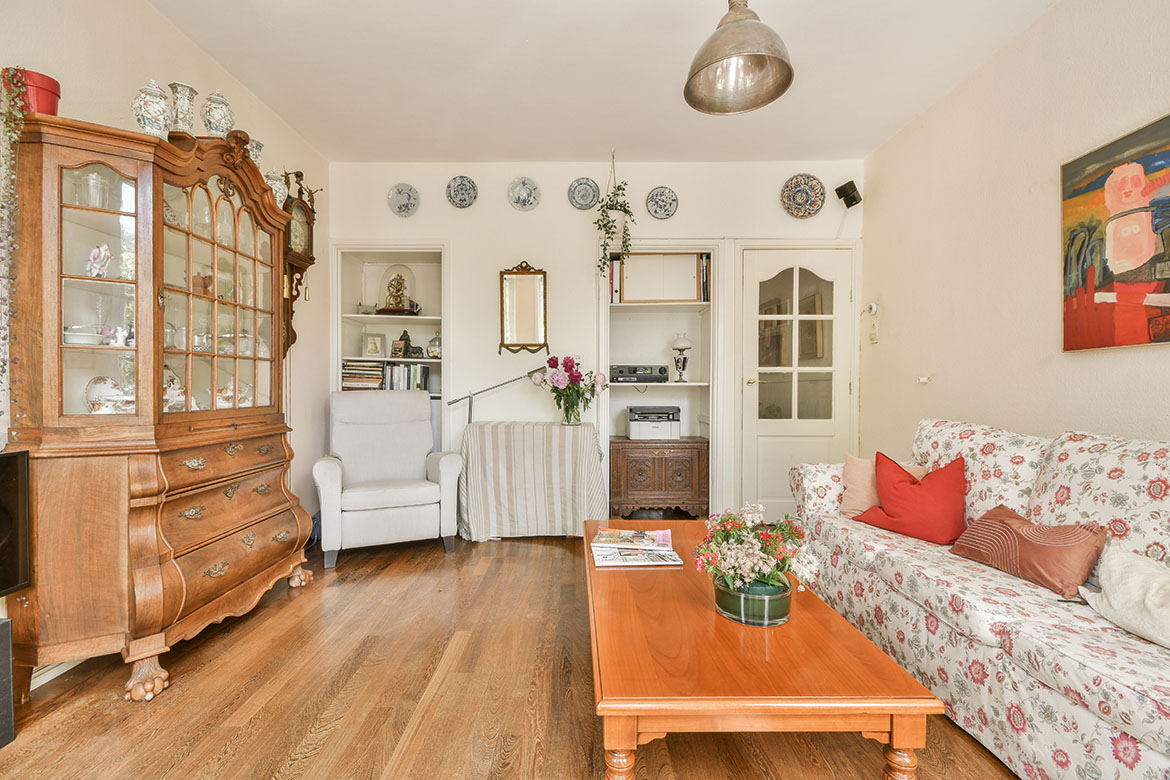
The flowers in the dining room were handpicked by your spouse, or sourced directly from the backyard. The dining table on which these flowers sat belonged to a relative who gifted it to you. The whole family refinished the table as a weekend project and your mother helped to reupholster the seat backs to update and modernise the setting. You purchased the dinnerware from a beautiful shop while on your honeymoon. In today’s world furniture comes in a box (usually from another country), items are not built to last as they once were and new things are prioritised over old ones. Imagine someone handed you an old, muddied cricket bat. It’s just an old cricket bat – right? Now imagine that the person who handed it to you also explains that this bat was once used by Sir Donald Bradman, as they point to his signature in the bottom corner. That old bat suddenly seems a much more valuable possession, doesn’t it? So, the same can be true for what we place in our homes.
Takeaways:
Furnish your home with items that tell a story, connect to memories, or speak of a long history – for many reasons an emotionally rich space is preferable to a stylish yet impersonal one.
Don’t throw items away, where possible try to re–home them – successive generations may just see their endearing value.
Fading traditions
During my interviews I heard of the concept of an ‘open house’ in which all were welcome – friends, neighbours, family. These gatherings usually occupied the holidays and would spill out into the street, sometimes continuing into the wee hours of the next morning. At dinnertime the family would assemble as one, for a daily debriefing, after which all members would have time to invest in their own unique creative endeavours and hobbies. Some projects also lay dormant as if frozen in time, desperately waiting for that key guest who would return and initiate the continuation of the activity or game. How quaint and charming this sounds. How much of this kind of intentional social cohesion still happens in the home today?
Takeaways:
The delicacy with which the fabric of traditions and customs are woven into the lives of those in the home – these can have an enduring positive effect on everyone.
Take time to bring back some of these traditions – introduce them to a friend, acquaintance, or to members of your family, or invent new ones.
More mature generations typically remark upon the newer ones just as preceding generations had done so with respect to them by commenting, ‘things were better in my day’ or ‘younger people have lost their way’ or something similar. Perhaps there’s something in this. I’m reminded of the principle of Chesterton’s Fence, which effectively states that one should not change or remove something without first fully understanding why it exists – thus avoiding unintended, negative consequences. This could be a nod to a more conservative mindset, however, I think it gives rise to an interesting question. If many people before me found value in something (materially; morals and traditions; generational wisdoms), then I might do well to take a second look at it, because it may indeed be worth valuing and preserving?
APEX Estate Agents are a team of avant–garde real estate specialists, marketing experts, and consummate professionals absolutely obsessed with challenging the status quo. We exist to be the ultimate custodians for our clients, thus improving their quality of life through property – that’s our raison d’être.