
By Scott Lynch, Founder and Director of Community Therapy
As a physiotherapist, I often ask older adults what their primary goal is. The most common answer is: “I want to stay in my own home for as long as possible…ideally forever.” Independence is the cornerstone of a fulfilling life as we age. Whether it’s tending to the garden, walking to the local shops or on the beach, playing with grandchildren or simply being able to get up from a favourite armchair without help, our physical health is the engine that keeps that independence running.
The good news? It is never too late to start, and the benefits go far beyond just “getting fit.”
Meeting The Gold Standard
When we talk about exercise for those over 55, we look to the Australian Physical Activity and Sedentary Behaviour Guidelines. These aren’t just suggestions; they are an evidence–based roadmap for a longer, healthier life.
For older Australians, the standards recommend:
- Accumulating 150 to 300 minutes of moderate–intensity physical activity (like brisk walking or swimming) each week.
- Strength and Balance training at least two days a week. This is the “secret sauce” for staying at home, as it directly reduces the risk of falls which is the leading cause of injury–related hospitalisation for seniors.
Functional Fitness
Exercise isn’t just about lifting weights; it’s about functional movement. As physiotherapists, we focus on exercises that mimic daily life.
- Squats are essentially practice for getting on and off the toilet or in and out of a car.
- Lunges help you get down to the floor.
- Calf raises help you reach the top shelf in the pantry.
- Balance exercises ensure you can navigate a rugged garden path or a busy shopping centre with confidence.
By maintaining our muscle mass and bone density, you aren’t just adding years to your lives; you are adding life to your years.
The Power of Group Exercise
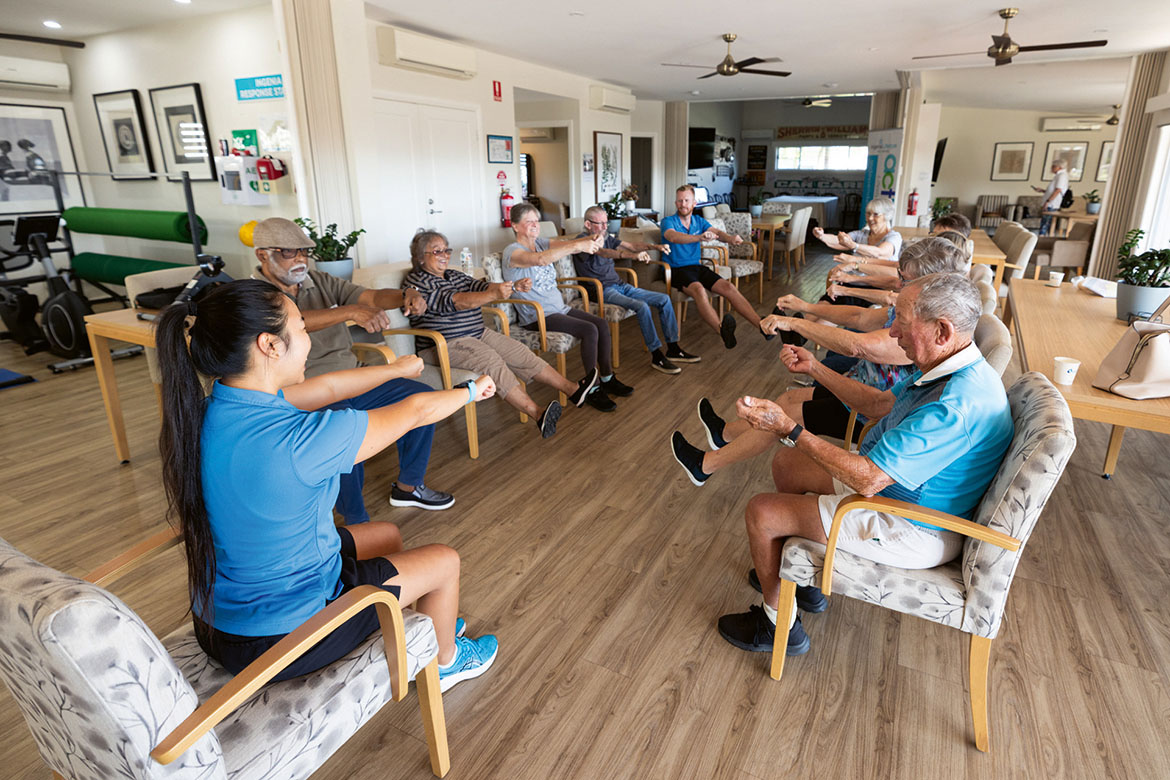
While a solo walk is great, there is magic in moving with others. Research consistently shows that social connection is one of the strongest predictors of longevity. In fact, some studies suggest that a lack of social connection can be as damaging to our health as smoking 15 cigarettes a day.
When you join a group exercise class, you aren’t just working your heart and lungs; you are nourishing your brain. Socialising during exercise:
- Boosts Mental Health: It reduces feelings of isolation and depression.
- Improves Cognitive Function: Navigating social cues while moving keeps the brain “plastic” and resilient.
- Increases Consistency: You’re much more likely to show up on a rainy Tuesday if you know your friends are waiting for a chat afterwards!
The “Blue Zones”, areas of the world where people live the longest, all share a common thread: movement is naturally built into a day filled with social interaction.
Taking the First Step
Starting a new routine can feel daunting, especially if you haven’t exercised in a while or are managing aches and pains. My advice is always to start small and seek professional guidance. A physiotherapist can help tailor movements to your specific needs, ensuring you progress safely and effectively.
Staying at home isn’t just about the four walls around you; it’s about having the physical freedom to enjoy everything within them. By prioritising movement today, you are investing in your independence for tomorrow.
Free Senior Exercise Groups on the Central Coast*
At Community Therapy, we are proud to offer government–funded, free senior exercise groups across the Central Coast. These sessions are designed by healthcare professionals to improve your strength, balance, and social wellbeing. We offer a range of group exercise programs including those funded by the Hunter New England Central Coast Primary Health Network (PHN) and Commonwealth Home Support Program (CHSP).
To find a group near you and start your journey toward living better at home, contact our team today. Phone: 1300 031 935 | Email: admin@communitytherapy.com.au https://www.communitytherapy.com.au/exercise-groups/
*Terms and Conditions apply for PHN and CHSP groups